Skip to the content
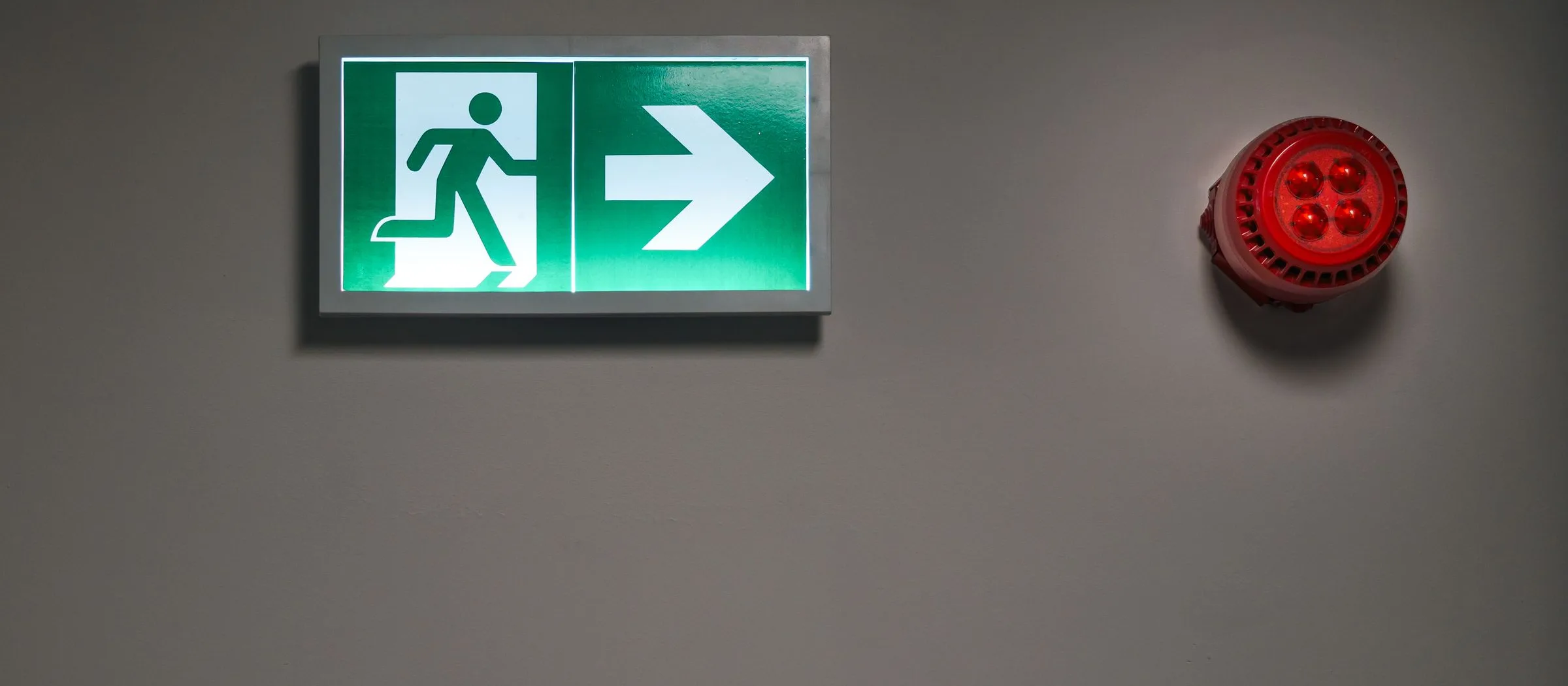
An illuminated exit sign and a red alarm sounder on a wall

Fire Alarm and Voice Evacuation

Fire detection and alarm, voice evacuation, and the interfaces that start a building's fire safety systems.

We design, supply, install, test and commission the fire detection and alarm systems and the voice evacuation systems of buildings, and maintain the systems we installed: the control panels and their network, the detectors, manual call points, sounders and visual alarm devices on the loops, the voice alarm equipment, microphones and loudspeakers, and the interfaces through which the fire alarm stops plant, releases doors and starts the fire safety systems. The sprinklers and the extinguishing systems it monitors and releases have a page of their own under Mechanical.

The design starts from the fire strategy: how the building is evacuated, all at once, in phases or, in a hospital, compartment by compartment, and the category of protection each part needs. From it we divide the building into zones that follow its storeys and compartments, choose and place the detection for each room's risk, and write the cause and effect with the fire engineer and the mechanical, electrical and lift designs: what each alarm stops, releases, starts and tells. We design to the UAE Fire and Life Safety Code of Practice in the UAE, and to NFPA 72, or to BS 5839-1 with EN 54 equipment, elsewhere, as the authority and the client require.

We supply the panels, the devices and the voice alarm equipment, each certified to EN 54 or listed to the UL standards and approved by the civil defence for use in the UAE, and our teams install them with their fire-resistant cables on site. Every device is tested, every line of the cause and effect is proved with the systems it drives, the sound levels and the intelligibility are measured in every area and the batteries are proved for their duration, before the civil defence witnesses the system at handover. Under a service contract we then maintain the systems we installed: devices tested, and detectors cleaned or exchanged, at the intervals the codes set, and batteries renewed.

Detection, zones and the cause and effect

Under BS 5839-1 a zone covers no more than 2,000 m² on one storey, and no point under a flat ceiling lies more than 7.5 m from a smoke detector or 5.3 m from a heat detector. In a hospital we detect throughout, category L1, as HTM 05-03 Part B asks, with flush, gasketed devices where a clinical ceiling is wiped clean, and aspirating detection to EN 54-20 in MRI rooms, whose sampling pipes carry no ferrous part. Class A loops of NFPA 72, with isolators between the zones, lose no device to a break and no more than one zone to a short circuit.

The cause and effect sets what each alarm does: the ventilation stops or turns to smoke control, lifts return to their designated floor to EN 81-73, door holders release, doors on escape routes unlock, gas shut-off valves close and pneumatic tube carriers are held. Detection fills the pre-action pipework over a data hall, and a releasing panel to EN 12094-1 discharges a room's extinguishing gas only when two detectors agree, after a warning.

Voice evacuation and staged alarms

Where the fire strategy calls for a voice system, the alarm speaks: alert and evacuate messages in Arabic and English, and live announcements from the fire microphone, through equipment to EN 54-16 and loudspeakers to EN 54-24. We design each area for a speech transmission index of 0.50 or more, measured to IEC 60268-16, as BS 5839-8 and EN 50849 ask. The loudspeakers run on interleaved A and B circuits from amplifiers with a standby, so that one fault silences no area, and batteries carry the system for 24 hours and then 30 minutes of alarm under BS 5839-8, or 24 hours and 15 minutes under NFPA 72.

In a hospital, where the fire strategy sets progressive horizontal evacuation, the alarm is staged: the evacuate signal in the compartment of the fire, an alert in the compartments beside it, and a discreet staff alarm elsewhere. The medical gases are never shut off by the fire alarm, since patients depend on them: staff close a zone's area valves by hand where the fire plan asks it.

Systems and equipment

Control and indication

  • Fire alarm control panels: addressable and networked, to EN 54-2 and EN 54-4 or listed to UL 864
  • Repeat panels: at the entrances, the telephone operators' room and wherever staff answer an alarm
  • Graphic workstations: the building's plans with every device, in the fire control room
  • Monitoring links: to the civil defence's monitoring where the authority requires it

Detection and call points

  • Point detectors: optical, heat and multi-sensor, on addressable loops with isolators
  • Aspirating detection: to EN 54-20, for data halls, MRI rooms and clean rooms
  • Beam detectors: to EN 54-12, across atria and halls
  • Manual call points: to EN 54-11, at every exit from a floor and to open air

Alarms and voice

  • Sounders and visual alarm devices: to EN 54-3 and EN 54-23
  • Voice alarm racks: to EN 54-16, with standby amplifiers and A and B loudspeaker circuits
  • Loudspeakers: to EN 54-24, in ceilings, on walls and as horns outdoors
  • Fire microphones: live announcements to chosen zones from the fire control room
  • Fire telephones and refuge points: two-way speech for firefighters and for people waiting at refuges, to BS 5839-9

Interfaces

  • Plant and smoke control: air handling units, smoke dampers and smoke extract, to the cause and effect
  • Doors: holders released, and access-controlled doors on escape routes unlocked
  • Lifts: returned to their designated floor on the alarm, to EN 81-73
  • Gas and pneumatic tubes: shut-off valves closed and carriers held
  • Extinguishing systems: pre-action valves opened, and extinguishing gas released through panels to EN 12094-1
  • Public address: announcements and background music silenced for the voice alarm

Standards we work to

  • NFPA 72: the National Fire Alarm and Signaling Code
  • EN 54-2, EN 54-16 and EN 54-24: control and indicating equipment, voice alarm control and indicating equipment, and voice alarm loudspeakers
  • BS 5839-1: fire detection and fire alarm systems for buildings, in non-domestic premises
  • BS 5839-8: fire detection and fire alarm systems for buildings, voice alarm systems
  • EN 50849: sound systems for emergency purposes
  • IEC 60268-16: sound system equipment, the objective rating of speech intelligibility by speech transmission index
  • HTM 05-03 Part B: fire detection and alarm systems in healthcare premises
  • The local authority codes of the UAE, the UAE Fire and Life Safety Code of Practice among them