Skip to the content
A row of parabolic trough solar collectors under a clear sky

Solar Thermal

Solar collector fields, solar loops and preheat stores that heat a building's water from the sun.

We design, supply, install, test and commission solar thermal systems, and maintain the systems we installed: fields of flat-plate or evacuated tube collectors on roofs and canopies, the solar loops with their pump stations, heat exchangers and expansion vessels, the preheat stores and the backup heating that brings the water to its temperature, and the controls and heat meters that run and measure them. They heat the hot water of hospitals, hotels, residential buildings and sports facilities, and the water of pools.

The design starts from the hot water the building uses, hour by hour and through the year, and from the roof that can take the collectors. We size the collector field and the stores for the share of the annual demand the project or the authority sets, tilt the collectors at about the site's latitude, some 25° in Dubai, facing south, and select them on their performance tested to ISO 9806. In the Gulf the demand falls in summer just as the sun is strongest, so we design every system for stagnation, the hours when the collectors are hot and no heat is drawn.

We supply the collectors, pump stations, heat exchangers, stores and controls, those of the brands we carry among them, and our teams install them on site. Each solar loop is pressure tested, flushed and filled, the pump stations and controls are commissioned, and the heat delivered is metered from the first day. Under a service contract we then maintain the systems we installed: collectors cleaned of dust, the solar fluid and the expansion vessels checked, and the pumps, valves and controls tested.

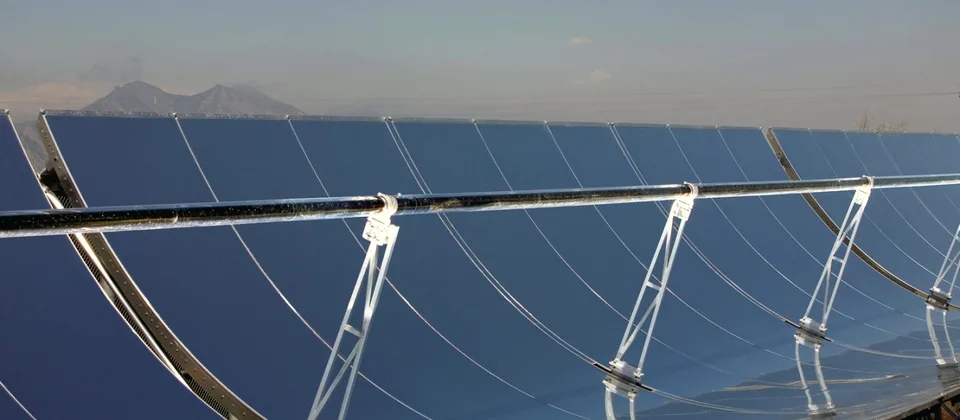
Collectors and the solar loop

Flat-plate collectors suit most systems that store hot water at 60 °C; evacuated tube collectors lose less heat and serve higher temperatures or smaller roofs. Each is tested to ISO 9806 against the requirements of EN 12975, and the rows are balanced so that each takes its share of the flow. A closed solar loop of treated water, or of water and glycol, carries the heat through a heat exchanger to the store, so that the hard water of the supply never scales the collectors.

Stagnation is the design case in the Gulf. A flat-plate collector in the sun with no flow reaches commonly 150 to 200 °C, an evacuated tube more, and the fluid in it boils. We size the expansion vessel to take the fluid the vapour drives out of the collectors, choose copper or stainless steel pipework, insulation and seals for those temperatures, and add a heat dissipater or night circulation that sheds the heat the building does not use, so that glycol, where the loop holds it, does not break down.

Storage, backup heating and Legionella

The solar heat goes into preheat stores that feed the calorifiers, stratified so that the coldest water returns to the solar heat exchanger. Water held between 20 and 45 °C can grow Legionella, and a preheat store spends hours in that range, so we keep its volume to what the field heats in a day and raise its whole contents to 60 °C for 1 hour each day. The calorifiers after it store at 60 °C or more, heated by boilers, heat pumps or electric heaters when the sun falls short, so that every hot outlet of a healthcare building reaches 55 °C within 1 minute under HTM 04-01.

A solar store can run far hotter than 60 °C on a summer afternoon, so thermostatic mixing valves limit the water to 41 °C at the outlets where patients could be scalded. The controls run the solar pumps when the collectors are warmer than the store, protect the store from overheating, and log the temperatures, the pressures and the heat each field delivers, for the building management system.

Systems and equipment

Collector fields

  • Flat-plate collectors: selective absorbers under low-iron glass, tested to ISO 9806
  • Evacuated tube collectors: for higher temperatures and smaller roofs
  • Mounting frames: tilted to the latitude and anchored for the wind on the roof
  • Collector pipework: copper or stainless steel, insulated for the stagnation temperature and clad

Solar loop

  • Pump stations: circulation pumps with flow meters, check valves and safety valves
  • Heat exchangers: plate or coil, between the solar loop and the water
  • Expansion vessels: sized for the fluid the collectors drive out when they stagnate
  • Heat dissipaters: shedding the heat the building does not use

Storage and backup heating

  • Preheat stores: stratified, their whole contents raised to 60 °C each day
  • Calorifiers: storage at 60 °C or more, heated by boilers, heat pumps or electric heaters
  • Thermostatic mixing valves: limiting the water to 41 °C where patients could be scalded

Controls and metering

  • Solar controllers: running the pumps on the difference between collector and store
  • Heat meters: the solar heat each field delivers
  • Monitoring: temperatures, pressures and faults, reported to the building management system

Standards we work to

  • ISO 9806: solar energy, solar thermal collectors, test methods
  • EN 12975: solar energy systems and components, solar collectors, general requirements
  • EN 12976: thermal solar systems and components, factory made systems
  • EN 12977: thermal solar systems and components, custom built systems
  • HTM 04-01: safe water in healthcare premises
  • ASHRAE 188: Legionellosis, risk management for building water systems
  • The local authority codes of the UAE, the Dubai Building Code among them