Skip to the content
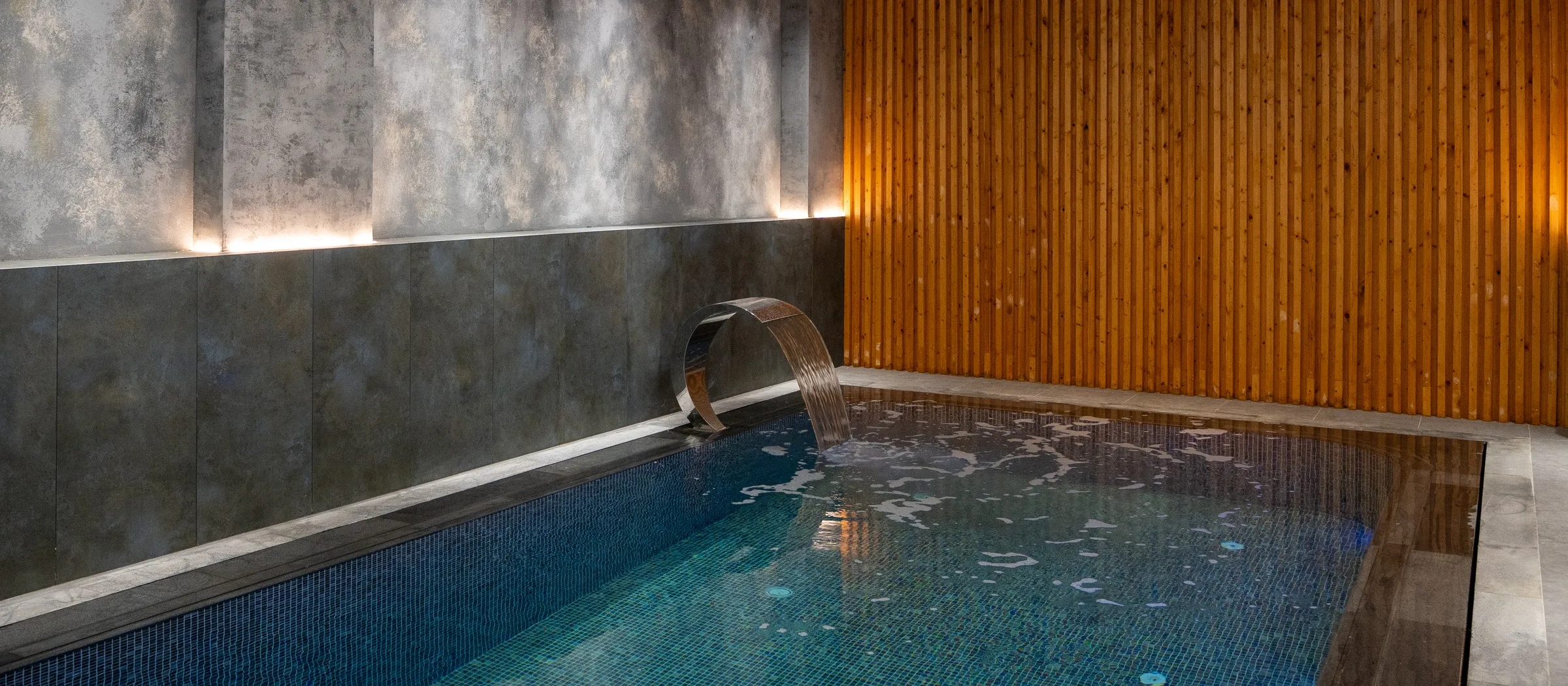
An indoor pool with a water spout, wood-panelled walls and linear ceiling lights

Pools and Hydrotherapy

Water treatment, heating and hall air for swimming pools, spas and the hydrotherapy pools of hospitals.

We design, supply, install, test and commission the plant of swimming pools, spas and hydrotherapy pools, and maintain the systems we installed: the circulation through balance tanks, strainers, pumps and filters, the dosing of disinfectant and pH correction with its controllers, the heating and cooling of the water, the inlets, outlets and overflow channels in the pool, and the ventilation and dehumidification of indoor pool halls. We design them for hotels, residential buildings, schools and clubs, and the hydrotherapy pools of hospitals and rehabilitation centres.

The design starts from the pool's use: its area and depth, the bathers it takes at its busiest, and the temperature of its water. From the bather load we set the turnover, the time in which the whole volume passes the treatment, shorter for shallow, warm and busy pools, and size the pumps, filters and balance tank for it. We hold the water to the quality of the PWTAG Code of Practice, DIN 19643 or the authority's rules, and design public pools to EN 15288-1, their suction outlets and circulation among them.

We supply the pumps, filters, dosing systems, heat exchangers and pool fittings, those of the brands we carry among them, and our teams install them on site. Each system is pressure tested, the pool filled and its circulation balanced, the dosing and its controls commissioned, and the water tested against its quality before the pool opens. Under a service contract we then maintain the systems we installed: filters inspected and their media renewed, dosing pumps and sensors serviced, and the water's quality checked.

Circulation, filtration and disinfection

In our designs the water leaves over deck-level channels and through outlets in the floor, by gravity to a balance tank, so that no pump draws directly on an outlet a bather could block, and each outlet's grille passes the water at commonly 0.5 m/s or less. From the balance tank it passes hair and lint strainers ahead of the circulation pumps, then is dosed with a coagulant ahead of sand or glass media filters running at commonly 25 m/h or less, which also take out the Cryptosporidium that chlorine is slow to kill.

After the filters the water is disinfected with sodium or calcium hypochlorite, commonly with ultraviolet light as well, which breaks down the chloramines that irritate eyes and give a pool hall its smell, and its pH is corrected with acid or carbon dioxide. A controller measures the free chlorine and the pH and doses to hold them, the pH commonly at 7.2 to 7.6. The chemicals stand apart in bunded, ventilated stores, since a hypochlorite and an acid that meet release chlorine gas.

Hydrotherapy, heating and the pool hall

A hydrotherapy pool is shallow, commonly 1 to 1.5 m deep, and warm, commonly 34 to 36 °C, and its patients may be frail or have wounds. Its warmth lies in the range in which Legionella and Pseudomonas grow, so it relies on its disinfection and on a turnover shorter than a swimming pool's. We give it steps with handrails, level access and a hoist, and a balance tank sized for the water its patients displace.

Pool water is heated through titanium plate heat exchangers, which chlorinated water does not corrode, from boilers, heat pumps or solar heat; in the Gulf an outdoor pool needs cooling in summer as much as heating in winter. The hall of an indoor swimming pool is kept commonly 1 to 2 K warmer than the water to limit evaporation, and dehumidified by air handling units that recover the heat of the evaporated water, with the supply along the glazing so that it does not mist, and the fixings above the water of grades the hall's chlorinated air does not corrode.

Systems and equipment

Circulation and filtration

  • Balance tanks: taking the water from the channels and outlets by gravity, sized for displacement and backwash
  • Strainers and circulation pumps: hair and lint strainers ahead of duty and standby pumps
  • Filters: sand or glass media, with coagulant dosed ahead of them
  • Pool fittings: inlets, deck-level channels and floor outlets with grilles sized for a low velocity

Disinfection and dosing

  • Chlorine dosing: sodium or calcium hypochlorite, dosed on the free chlorine the controller measures
  • pH correction: acid or carbon dioxide, dosed on the controller's pH reading
  • Ultraviolet units: breaking down chloramines after the filters
  • Chemical stores: hypochlorite and acid apart, in bunded and ventilated rooms

Heating and cooling

  • Plate heat exchangers: titanium, between the pool water and the heating or cooling water
  • Heat pumps and chillers: heating the water in winter and cooling outdoor pools in summer
  • Solar heating: collectors or the preheat of the building's solar thermal system

Pool halls and hydrotherapy

  • Dehumidifying air handling units: with heat recovery from the hall's exhaust air
  • Supply along the glazing: air that keeps the glass from misting
  • Hydrotherapy pools: shallow and warm, with steps, handrails, level access and a hoist
  • Spa pools: their own treatment, with a turnover far shorter than a swimming pool's

Standards we work to

  • EN 15288-1: swimming pools for public use, safety requirements for design
  • EN 15288-2: swimming pools for public use, safety requirements for operation
  • EN 13451: swimming pool equipment, safety requirements and test methods
  • DIN 19643: the treatment of the water of swimming pools and baths
  • PWTAG Code of Practice: the management and treatment of swimming pool water
  • WHO Guidelines for safe recreational water environments, swimming pools and similar environments
  • The local authority codes of the UAE, the Dubai Building Code among them