Skip to the content
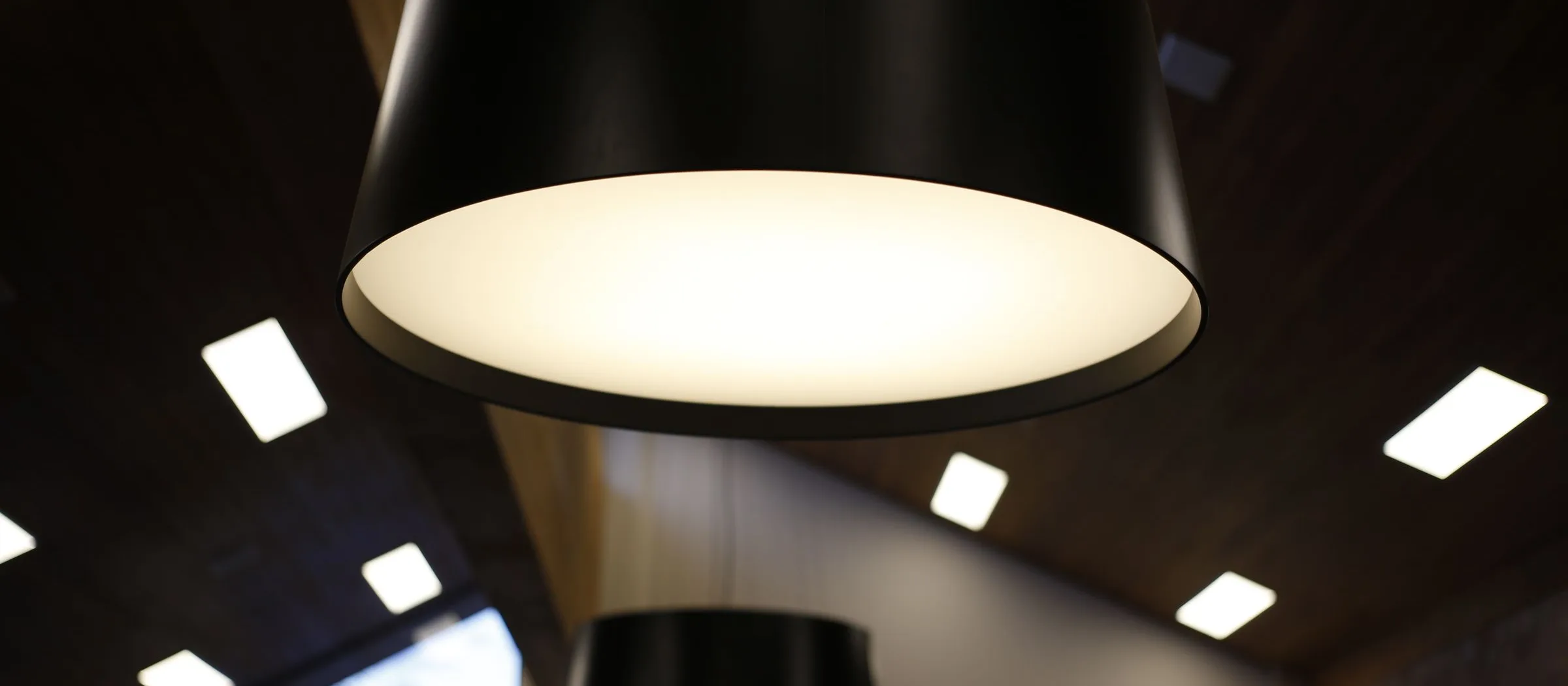
Black pendant luminaires hanging under a dark ceiling with recessed lights

Lighting

Lighting for the people and the work of a building, and the emergency lighting that leads them out of it.

We design, supply, install, test and commission the lighting of buildings and their sites, and maintain the systems we installed: the general and task lighting of the rooms, the clinical lighting of a hospital, the exterior lighting of roads, car parks and façades, the emergency lighting of the escape routes, and the controls that switch and dim it all. Almost all of it is now LED, chosen for its light, its efficacy, its life and the way it can be controlled.

The design starts from the tasks of each room and the people who use it. We calculate the maintained illuminance, the uniformity, the glare rating and the colour rendering of each room to EN 12464-1, or to the IES recommendations where a project follows American practice, and to CIBSE LG2 in hospitals, with the daylight each room receives taken into account, and lay out the emergency lighting to EN 1838 and the authority's fire code.

We supply the luminaires, the emergency lighting and the controls, those of the brands we carry among them, and our teams install, connect and aim them on site. Before handover we measure the illuminance of the rooms against the design, test every emergency luminaire for its full duration, and set the scenes, the sensors and the schedules of the controls with the client. Under a service contract we then maintain the systems we installed, and record the monthly and annual emergency lighting tests the standards ask for.

Interior and clinical lighting

We light each room to the maintained illuminance its tasks need under EN 12464-1: 500 lux on the desks of an office, with a unified glare rating of 19 or less; 100 lux of general lighting on a ward, with 300 lux for reading and 1000 lux for examination at the bed; 1000 lux of general lighting in an operating theatre, with a colour rendering index of 90; and night lighting of 5 lux for observation that lets patients sleep. The operating light over the table, of 40,000 to 160,000 lux, comes with the theatre's equipment.

Clinical rooms take luminaires sealed to IP54 or IP65 that can be cleaned with the hospital's disinfectants, and theatres and cleanrooms take luminaires flush with the sealed ceiling, so that they do not break the room's pressure. We choose the colour temperature for each space, warmer on the wards and cooler where colour must be judged, and where the client wants it, tunable white lighting in intensive care that follows the day and helps patients keep their rhythm of sleep.

Emergency lighting, exterior lighting and controls

Emergency lighting takes over when the normal lighting fails: under EN 1838, at least 1 lux on the centre line of an escape route and 0.5 lux on the floor of an open area, half of it within 5 s and all of it within 60 s, and where a hazardous task must be brought to a safe end, 10 per cent of the normal illuminance or 15 lux, whichever is greater, within 0.5 s. It lasts one to three hours under EN 1838 and BS 5266-1, three in hospitals, or 90 minutes under NFPA 101.

Outside, we light roads and car parks to EN 13201 with luminaires that keep the light on the ground and off the sky, and light façades and entrances to suit the architecture. The controls run on DALI to IEC 62386, or on KNX where the building management system uses it: presence and daylight sensors that dim or switch each room, scenes for theatres and meeting rooms, and schedules for corridors and exteriors.

Systems and equipment

Interior lighting

  • General luminaires: LED panels, downlights and linear luminaires to each room's illuminance and glare limits
  • Clinical luminaires: sealed IP54 and IP65 luminaires for wards, treatment rooms and laboratories
  • Theatre and cleanroom luminaires: flush and sealed to the ceiling, for rooms held at a pressure
  • Bedhead lighting: reading, examination and night lighting at each bed

Emergency lighting

  • Escape route lighting: self-contained or central battery luminaires to EN 1838
  • Exit signs: illuminated signs along every escape route, to the authority's fire code
  • Central battery systems: one supply for the emergency luminaires of a building or a zone
  • Automatic testing: addressable systems that test each luminaire and record the result, to IEC 62034

Exterior lighting

  • Road and car park lighting: column-mounted LED luminaires to EN 13201
  • Façade and landscape lighting: floodlights and inground luminaires that suit the architecture
  • Area floodlighting: for loading areas, plant yards and sports grounds

Controls

  • DALI and KNX control: addressable dimming and switching of each luminaire or group
  • Presence and daylight sensors: lights dimmed or switched by occupancy and by daylight
  • Scenes and schedules: for theatres, meeting rooms, corridors and exteriors
  • Building management interface: lighting states and faults passed on to the building management system

Standards we work to

  • EN 12464-1: light and lighting, the lighting of indoor work places
  • EN 1838: emergency lighting
  • BS 5266-1: emergency lighting, the code of practice for the emergency lighting of premises
  • EN 50172: emergency escape lighting systems
  • EN 13201: road lighting
  • IEC 62386: the digital addressable lighting interface
  • CIBSE LG2: lighting for healthcare premises
  • The local authority codes of the UAE, the UAE Fire and Life Safety Code of Practice among them