Skip to the content
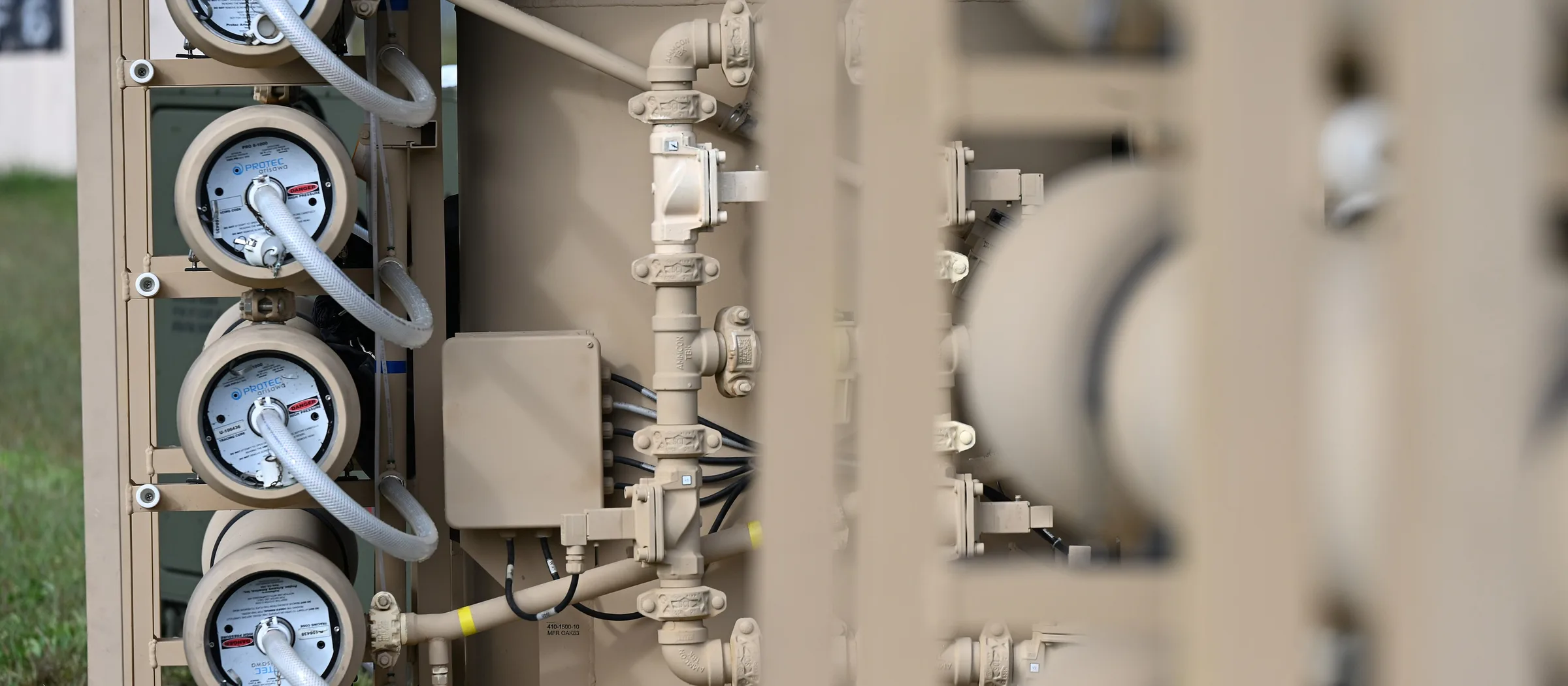
The pressure gauges and membrane vessels of a reverse osmosis water purification unit

Water Treatment

Filtration, softening and reverse osmosis plants, with the dialysis and sterile services water of hospitals.

We design, supply, install, test and commission water treatment plants for buildings and hospitals, and maintain the systems we installed: the filtration, softening and disinfection of the water a building takes in, the reverse osmosis plants and distribution loops of dialysis units, the purified water of sterile services departments and laboratories, the recycling of greywater, and the treatment of the water in heating, cooling and steam systems. Each plant starts from the water the site receives and ends at the quality its use requires.

The design starts from an analysis of the incoming water, from the public supply, a well or the site's own desalination plant, and from the quality each use requires: drinking water within the authority's limits and the WHO Guidelines for drinking-water quality, water for haemodialysis to ISO 23500-3, feedwater for steam sterilisers to EN 285, and laboratory water of the grades of ISO 3696. We choose the stages that take the one to the other, size them for the peak demand with storage between them, and duplicate the stages whose failure would stop a clinical service.

We supply the filters, softeners, reverse osmosis plants, disinfection units, dosing sets and pumps, and our teams install and pipe them on site. Each plant is flushed and disinfected, run in and sampled, and its water tested against the quality it was designed for, by an accredited laboratory where the use requires it, before handover. Under a service contract we then maintain the systems we installed: media and membranes cleaned and replaced, the dialysis loops disinfected on their schedule, and the water sampled and tested.

Water for dialysis

A patient on haemodialysis is exposed to about 120 litres of dialysis fluid in a treatment of 4 hours, across the dialyser's membrane, so ISO 23500-3 sets the quality of the water it is made from: a total viable microbial count below 100 CFU/mL and endotoxins below 0.25 EU/mL, with action levels of 50 CFU/mL and 0.125 EU/mL, and limits for the chemicals that harm patients. We treat the water in stages: multimedia filtration, softening, activated carbon in two beds in series so that no chlorine or chloramine passes, and two passes of reverse osmosis, the second polishing the permeate of the first to a conductivity of commonly 5 µS/cm or less.

The treated water runs in a loop without dead legs, in PEX, PVDF or stainless steel, past every dialysis point and back to the plant, at a velocity of commonly 1 m/s or more that keeps a biofilm from forming. The plant and the loop are disinfected by hot water or chemically on a fixed schedule, and conductivity, chlorine, temperature and flow are monitored and recorded.

Building water, sterile services and laboratories

For the building as a whole we filter the incoming water, soften it where its hardness would scale the calorifiers, humidifiers and kitchen equipment, and disinfect the stored water by ultraviolet, at a dose of commonly 40 mJ/cm², or by chlorination that leaves a free chlorine residual of commonly 0.2 to 0.5 mg/L at the outlets.

Sterile services departments need purified water for the final rinse of their washer-disinfectors and for the feedwater of their steam sterilisers and clean steam generators, both from reverse osmosis, often followed by electrodeionisation, to the quality HTM 01-01 and EN 285 set. Laboratories take the grades of ISO 3696: grade 3 for washing and general use, grades 2 and 1, polished at the point of use, for analysis. Greywater from showers and basins is treated biologically and disinfected for flushing and irrigation where the authority permits it.

Systems and equipment

Pretreatment and building water

  • Multimedia and sand filters: removing suspended solids from the incoming water
  • Activated carbon filters: removing chlorine, chloramines and organic matter
  • Water softeners: duplex units that regenerate in turn, so that soft water is always available
  • Disinfection: ultraviolet units and chlorine dosing for stored water

Reverse osmosis and purification

  • Reverse osmosis plants: single or double pass, with their high-pressure pumps and cleaning sets
  • Electrodeionisation: polishing the permeate for sterile services and laboratories
  • Laboratory water units: polishing to grades 2 and 1 of ISO 3696 at the point of use

Dialysis water

  • Dialysis water plants: carbon beds in series, softening and double-pass reverse osmosis to ISO 23500-3
  • Dialysis loops: PEX, PVDF or stainless steel ring mains without dead legs, with an outlet at each point
  • Loop disinfection: by hot water or chemically, on a fixed schedule
  • Monitoring: conductivity, chlorine, temperature and flow, recorded and alarmed

Recycling and system water

  • Greywater recycling: biological treatment and disinfection for flushing and irrigation
  • Closed circuit treatment: dosing pots and side-stream filters for heating and chilled water
  • Boiler feedwater treatment: softening or reverse osmosis, and dosing, for steam boilers

Standards we work to

  • ISO 23500-3: water for haemodialysis and related therapies
  • EN 285: large steam sterilisers
  • HTM 01-01: the management and decontamination of surgical instruments
  • ISO 3696: water for analytical laboratory use
  • WHO Guidelines for drinking-water quality
  • ASHRAE 188: Legionellosis, risk management for building water systems