Skip to the content
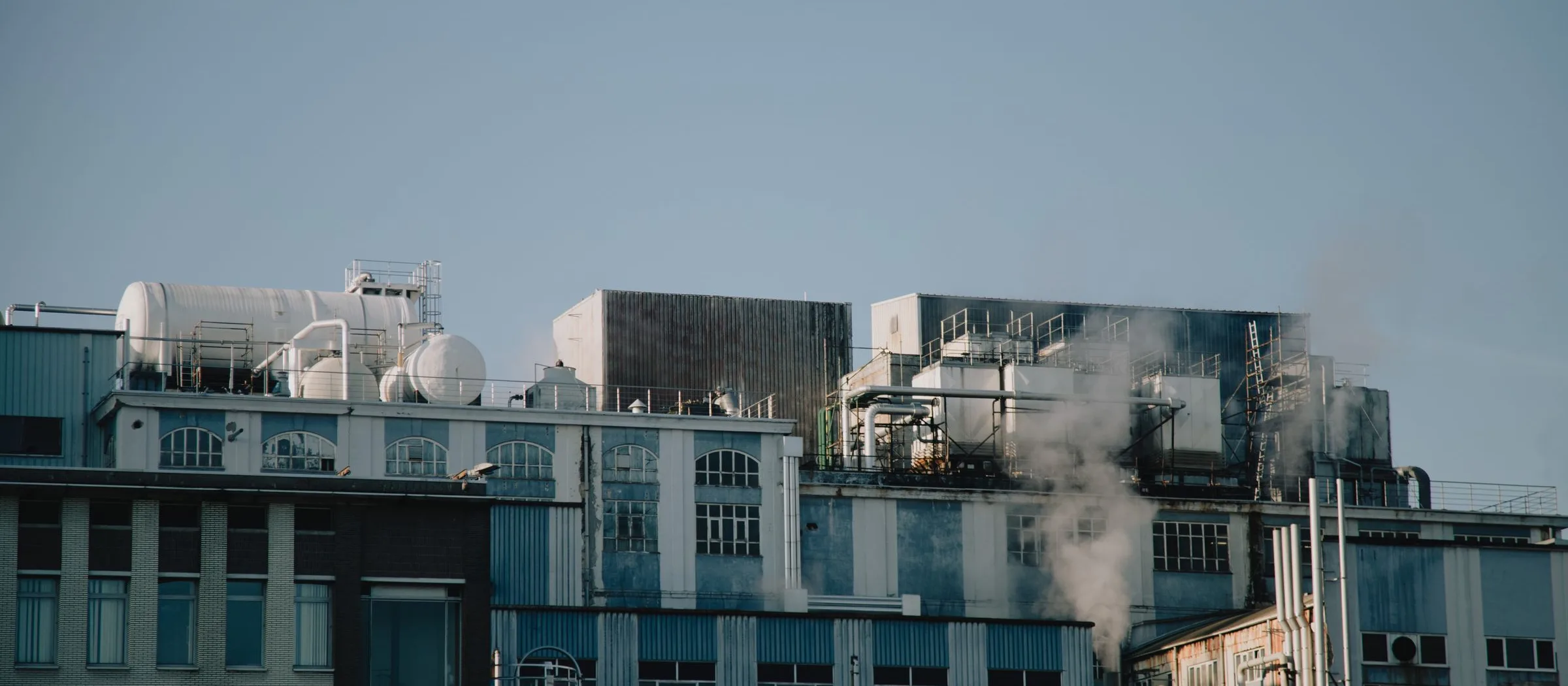
A factory building seen from its approach road, its air handling units and extract fans on the roof

Industrial

Factories and process buildings, with their utilities, compressed air, cooling and fire protection.

The building services of a factory

A factory's building services serve its production as much as its people. The lines need their compressed air, cooling water, process water, nitrogen and vacuum at the pressure, temperature and purity each process sets, and a stop in any of them can halt a line or spoil a batch. The halls must be ventilated against the heat of the Gulf and of the machines, the stores protected against the hazard of their contents, and the power carried to large motors and drives without disturbing the rest of the supply.

We plan a factory's services with its owner and the designer of its process, from the users each line brings: the flow, pressure, temperature and purity of each utility, how they vary through a shift, and where the plant will grow. The production machinery and its controls are the process designer's, and we bring the utilities and the power to the connection of each machine. Each system is designed to the UAE Fire and Life Safety Code of Practice and the regulations of the authorities that govern it, and to the ISO, IEC, EN, ASME and NFPA standards of its kind.

We supply the plant and equipment of each system we build, and our teams install it on site. Each utility is pressure tested, flushed and proved at its users before production starts: the compressed air for its dew point and, where its class requires it, for particles and oil, the nitrogen and the vacuum for flow, purity and level, and the fire pumps run at 150 per cent of their rated flow; the civil defence then witnesses the fire systems. Under a service contract we maintain the systems we installed. Each of these systems is described under Disciplines.

Process air and utilities

Each production line takes its utilities at its own pressure and purity, so we size every plant from the users it serves and run the mains on racks above the lines. Compressed air comes from screw compressors at commonly 7 to 8 bar for plant air, one running at full output on the base load and a variable speed machine trimming the rest; where no oil may reach the process, as in food, pharmaceutical and electronics production, the compressors are oil-free, class 0 for oil under ISO 8573-1. The distribution is a ring main around the hall, sized for a pressure drop of commonly no more than 0.1 bar from the receiver to the furthest point of use. Nitrogen comes from pressure swing adsorption generators at commonly 95 to 99.999 per cent purity, each with an analyser that vents gas below its purity, vacuum from a central plant sized from each user's level and flow, and process water at the quality each use needs, softened, demineralised or made by reverse osmosis.

Process cooling

A factory's machines, moulds and furnaces must shed their heat in any weather, and their small cooling passages scale or foul at the first lapse in the water's treatment. We give them a closed loop of treated water, filtered and inhibited, and reject its heat through plate heat exchangers to cooling towers or dry coolers. Where towers reject the heat, at Dubai's design wet bulb of 29 °C they give water at about 32 °C, so the loop runs commonly at 33 to 35 °C. The moulds, lasers and reaction vessels that need colder water take it from process chillers. The towers run under a water management programme to ASHRAE 188, standing where their drift cannot reach a fresh air intake. Nearly all the energy a compressor uses leaves it as heat, which we recover for hot water where the site can use it.

Fire protection

A factory's fire protection follows the hazard of each part of it rather than one rule for the whole. Each part is classified, by its occupancy under NFPA 13 or by its hazard class under EN 12845, and the class decides the design: under NFPA 13 ordinary hazard group 1 takes 6.1 mm/min over 139 m², and under EN 12845 ordinary hazard group 3 takes 5 mm/min over 216 m², each system calculated hydraulically from its most remote area to the pumps. High-piled storage takes early suppression fast response sprinklers, and the transformers deluge systems. The fire water tank is sized for the flow over its duration, commonly 60 minutes for ordinary hazard, the pumps follow NFPA 20 or EN 12845, and buried yard mains carry the water to the hydrants the fire service uses. Electrical and control rooms that water would harm are protected by clean agent or inert gas systems, and LPG tanks stand at the separation distances NFPA 58 sets by each tank's water capacity.

Power and earthing

A factory's power runs to large motors and drives, and to places where a gas could ignite. We design the distribution from the intake, at 11 kV in most of the UAE, through the substations to the main switchboards and the motor control centres, whose starters and variable speed drives run motors of efficiency class IE3 or IE4 of IEC 60034-30-1. Capacitor banks with detuned reactors correct the power factor to 0.95 or above without amplifying the harmonics of the drives, and active harmonic filters bring the current distortion within the limits of IEEE 519. Where gas is stored or burned, we classify the hazardous areas around the tanks, vents and regulators to IEC 60079-10-1 and rate every electrical item inside them for the gas. The site is earthed as a TN-S system from its transformers, with the structure's steel and every incoming service bonded to the main earthing terminal, and a risk assessment to IEC 62305-2 sets the class of the halls' lightning protection.

Ventilation and extract

A production hall in the Gulf takes heat from the sun on its roof and from its machines, and its air must be kept fit to work in. We ventilate and cool the halls with air handling units whose filters are chosen for the dust of the site, and give the extract of each process the make-up air it needs. Plant rooms using gas take detectors and an automatic shut-off valve, which closes when a detector reaches commonly 20 per cent of the lower explosive limit and opens again only by hand; every room where nitrogen could leak takes oxygen monitors that alarm when the oxygen falls below commonly 19.5 per cent, and the lead-acid battery rooms of the UPS systems are ventilated to IEC 62485-2. Smoke extract fans are rated to EN 12101-3 for the temperature and time the fire strategy sets. Where a product needs clean air, as in pharmaceutical production, we design cleanroom suites to ISO 14644-1 classes 5 to 8 and EU GMP grades A to D.

Building management

A factory's engineers need to see its utilities as clearly as its production staff see their lines. The building management system brings into one view the compressors and dryers, the cooling towers, chillers and pumps, the nitrogen and vacuum plants, the substations and the drives: plant with controls of its own reports over BACnet or Modbus, and the medium-voltage switchgear over IEC 61850. Flow and pressure meters at the compressed air plant and on its main branches let the operator find leaks and assess the system's energy use to ISO 11011, and dew point monitors on the dryer outlets raise an alarm when the air leaves too wet. The meters of electricity, water and cooling report by utility and by building, so that the cost of each can be seen, and an alarm that could stop a line reaches the engineers on duty at once. The fire alarm stops the plant through hardwired links, and the system watches the smoke control but never stands between the detection and the plant it stops.

What we hold to in a factory

The process sets the utilities: each is sized from the users of the lines it serves, and kept running where a stop would spoil production.

Each hazard is protected for what it is: the sprinklers follow the class of each part, the transformers take deluge, and the electrical items near gas are rated for it.

The utilities can be seen: each is metered and watched, so that a leak or a fault is found while it is small.

Systems and equipment

Compressed air

  • Screw compressors: oil-injected for plant air, or oil-free, class 0 for oil under ISO 8573-1
  • Dryers: refrigerant dryers to a pressure dew point of about 3 °C, desiccant dryers to −40 °C
  • Ring mains: aluminium, stainless steel or galvanised steel, with drops from the top of the main
  • Heat recovery: hot water from the compressors' oil or air cooling

Nitrogen, vacuum and water

  • Nitrogen generators: pressure swing adsorption or membrane, with buffer receivers and analysers
  • Liquid nitrogen storage: vacuum-insulated tanks with ambient vaporisers
  • Vacuum plants: rotary vane, dry claw or screw, and liquid ring pumps, with one standing by
  • Process water: softened, reverse osmosis or demineralised water, in loops that return to storage

Cooling

  • Closed cooling loops: treated, filtered and inhibited water for machines, moulds and reactors
  • Cooling towers: under a water management programme to ASHRAE 188
  • Dry coolers: rejecting the heat the loop collects, with no tower water to treat
  • Process chillers: chilled water for moulds, lasers and reaction vessels

Fire systems

  • Sprinklers: designed to the class of each part, early suppression fast response in high-piled storage
  • Deluge systems: for transformers and other high hazards
  • Fire pump sets: an electric main pump, a diesel pump and a jockey pump, to NFPA 20 or EN 12845
  • Yard mains and hydrants: buried fire mains around the site, for the fire service
  • Gaseous systems: clean agents or inert gases for the electrical and control rooms

Electrical power and safety

  • Motor control centres: starters and variable speed drives for the plant
  • Power factor correction: capacitor banks with detuned reactors, to 0.95 or above
  • Hazardous areas: classified to IEC 60079-10-1 around gas tanks, vents and regulators
  • Gas detection: detectors and shut-off valves in every plant room using gas
  • Oxygen monitors: in every room where nitrogen could leak