Skip to the content
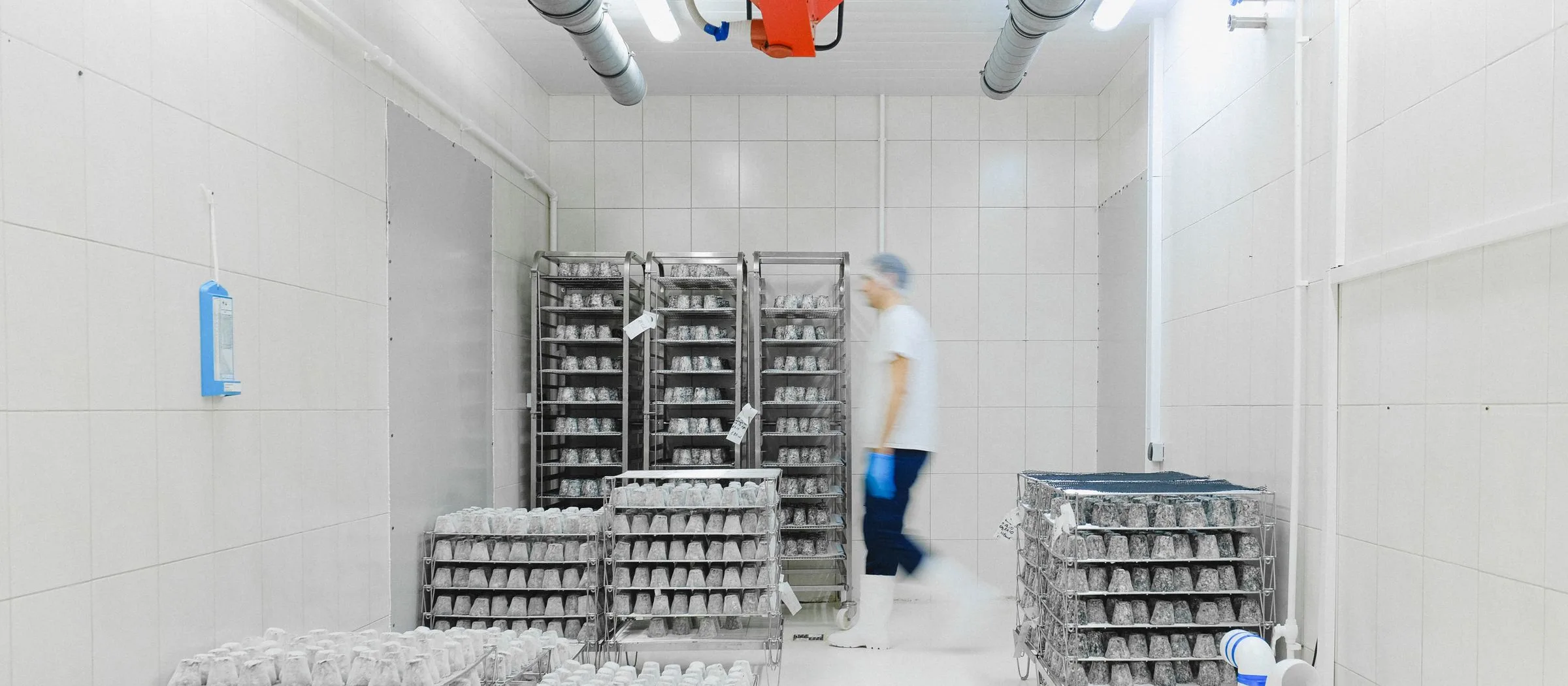
A worker moving through a white cold store of racked trays, under its evaporator

Refrigeration, Cold Rooms and Walk-in Mortuaries

Cold rooms, freezer rooms and walk-in mortuaries, with the refrigeration plant that holds their temperatures.

We design, supply, install, test and commission refrigeration systems and the rooms they keep cold, and maintain the systems we installed: walk-in cold rooms and freezer rooms for kitchens, stores and pharmacies, the refrigerated body stores and deep-freeze chambers of hospital mortuaries, and the condensing units, compressor packs, evaporators and controls that serve them. Each room is an enclosure of insulated panels with its doors, floor and lighting, and a refrigeration system sized for the heat that enters through them.

The design starts from what each room stores and at what temperature: chilled food at 0 to 4 °C, frozen food at −18 °C or colder, medicines and vaccines at 2 to 8 °C, and bodies at 2 to 4 °C for short-term storage and at −20 °C or colder for long-term storage. From the room's size, its panels, its door openings and the product brought in warm we calculate the load, choose the refrigerant and the system to the safety rules of EN 378 or ASHRAE 15, and give a second compressor or condensing unit to the rooms whose contents cannot be lost.

We supply the panels, doors, condensing units and evaporators, those of the brands we carry among them, and our teams build the rooms, run the refrigerant pipework and wire the controls on site. Each system is pressure tested with nitrogen, evacuated and charged, each room is pulled down to its temperature and held there, and its alarms are tested before handover. Under a service contract we then maintain the systems we installed: leak checks at the intervals the refrigerant charge requires, coils and drains cleaned, door seals and heaters checked, and the temperature records reviewed.

Cold rooms, freezer rooms and their plant

The rooms are built of insulated sandwich panels to EN 14509, commonly 100 mm thick for chilled rooms and 150 mm or more for freezer rooms, which stand on an insulated floor heated beneath so that the ground cannot freeze and heave. Freezer doors have heated frames, and every room has a door that opens from inside and an alarm push that a person shut in can reach.

Condensing units and compressor packs stand outside in the shade with room for their air, selected for an ambient of 46 °C and above, and serve evaporators chosen for the room's temperature and humidity: a small temperature difference across the coil keeps fresh produce from drying, and freezer evaporators defrost electrically or by hot gas, on a timer or on demand. R-404A gives way to refrigerants of a lower global warming potential, R-448A and R-449A among them, or to carbon dioxide in larger packs, and we check each charge against the room it could leak into under EN 378.

Walk-in mortuaries

A hospital mortuary keeps its bodies in refrigerated stores held at 2 to 4 °C for short-term storage, and in deep-freeze chambers at −20 °C or colder where a body must be kept for longer. We plan the stores with the hospital to HBN 20 or the health authority's guidelines, as walk-in chambers with fixed or mobile racking of body trays loaded by a mechanical hoist, and with spaces for bariatric bodies.

Each store has two refrigeration systems, or a duty and a standby condensing unit, so that a failure does not warm it, and its temperature is recorded continuously and alarmed to the mortuary and the building management system. The stores are lined with stainless steel or hygienic panels, with coved corners and a floor laid to a drain for cleaning. The post-mortem room beside them is held negative to its neighbours and extracts at the table, to HTM 03-01.

Systems and equipment

Cold rooms and freezer rooms

  • Walk-in cold rooms: chilled stores at 0 to 4 °C for kitchens and central stores
  • Freezer rooms: −18 to −25 °C, with heated door frames and floors heated beneath
  • Pharmacy and vaccine stores: 2 to 8 °C, with continuous temperature recording
  • Panels and doors: insulated sandwich panels to EN 14509, hinged and sliding insulated doors

Walk-in mortuaries

  • Body stores: refrigerated chambers at 2 to 4 °C with racking of stainless steel body trays
  • Deep-freeze chambers: −20 °C or colder, for long-term storage
  • Bariatric spaces: wider trays and doors for larger bodies
  • Post-mortem room extract: downdraught extract at the tables, the room held negative

Refrigeration plant

  • Condensing units: air-cooled, selected for an ambient of 46 °C and above, single or duty and standby
  • Compressor packs: several compressors on a common suction, for kitchens and stores with many rooms
  • Evaporators: unit coolers with electric or hot gas defrost
  • Refrigerants: lower global warming potential blends and carbon dioxide, chosen under EN 378 and ASHRAE 34

Controls and safety

  • Room controllers: temperature control, defrost and door alarms for each room
  • Temperature monitoring: continuous records, with alarms to the building management system
  • Refrigerant leak detection: in plant rooms, and in occupied rooms where the charge requires it
  • Trapped person alarms: an alarm push and an inside release in every room

Standards we work to

  • EN 378: refrigerating systems and heat pumps, safety and environmental requirements
  • ASHRAE 15: the safety of refrigeration systems
  • ASHRAE 34: the designation and safety classification of refrigerants
  • EN 14509: self-supporting double skin metal faced insulating panels
  • HBN 20: facilities for mortuary and post-mortem room services
  • HTM 03-01: specialised ventilation for healthcare buildings