Skip to the content
Rows of photovoltaic panels on a roof in sunlight

Solar Photovoltaic

Photovoltaic arrays on roofs, car parks and open ground, connected to the building and the grid.

We design, supply, install, test and commission solar photovoltaic systems on roofs, over car parks and on open ground, and maintain the systems we installed: the modules and their mounting structures, the strings and their DC cabling, the inverters, the connection to the building's switchboards and to the utility's network, the battery storage where a project needs it, and the monitoring that reports what each system produces.

The design starts from the site, its sun and its loads. We model the yield of each array from the irradiation of the site, its orientation and tilt, its shading and its losses to heat, dust and cabling; size the array and the inverters for the building's demand and the export the utility allows; and design the strings, the protection, the earthing and the surge protection to IEC 60364-7-712 and IEC 62548, with the connection approved under the utility's rules, those of DEWA's Shams Dubai in Dubai.

We supply the modules, the inverters, the mounting structures and the DC switchgear, those of the brands we carry among them, and our teams install and connect them on site. Each string is tested before connection for its open-circuit voltage, short-circuit current, polarity and insulation resistance to IEC 62446-1, and the system is commissioned with the utility before it exports. Under a service contract we then maintain the systems we installed: modules cleaned as often as the site's dust calls for, connections checked, arrays surveyed by thermography.

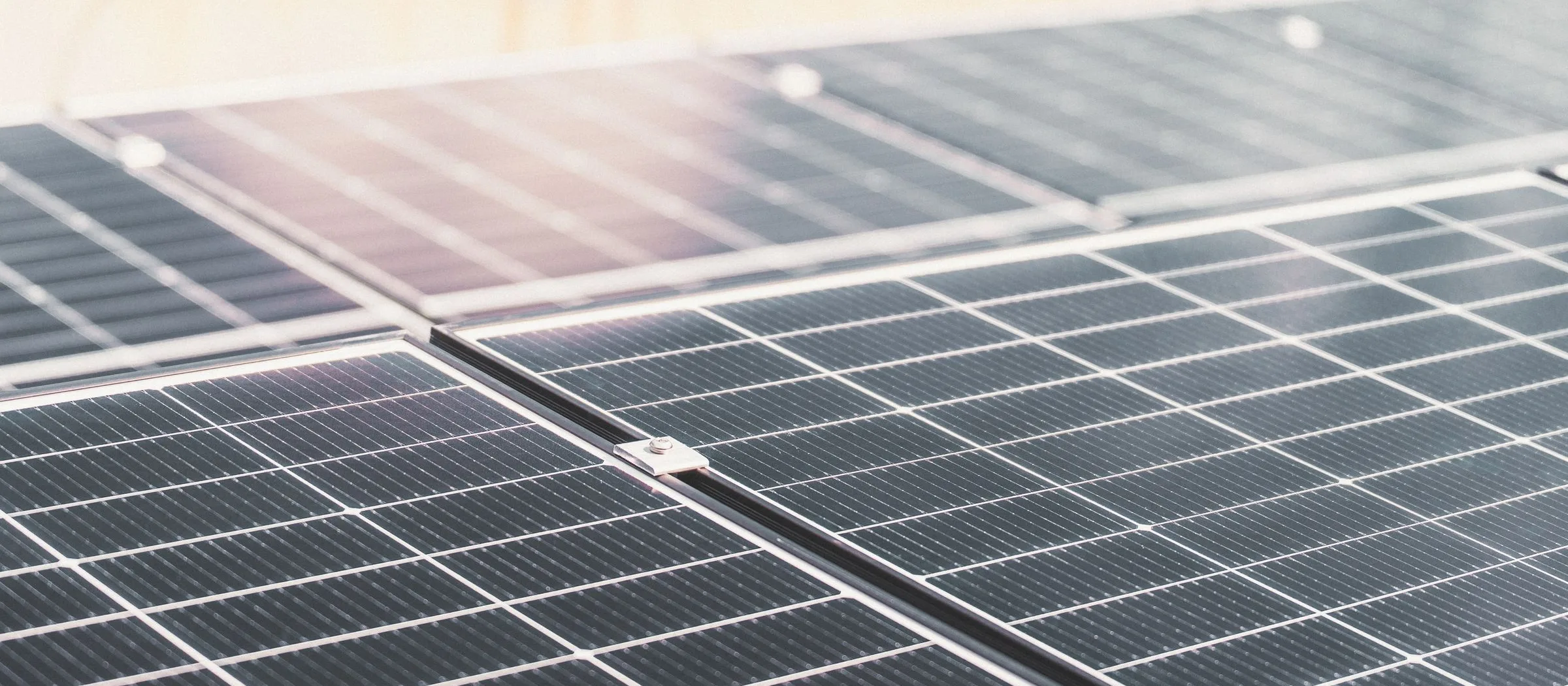
Arrays, modules and inverters

We design with crystalline silicon modules certified to IEC 61215 and IEC 61730, monofacial on roofs and often bifacial over carports and on open ground, at a tilt that suits the latitude of the site, the wind and the cleaning, about 20 to 25 degrees in the UAE. In a Gulf summer the cells reach 70 °C and more, so we size the strings for the voltage of the hottest afternoon as well as the open-circuit voltage of the coldest morning, which must stay within the inverter's maximum of 1000 or 1500 V DC.

String inverters suit roofs and carports, and central inverters suit large ground arrays. We set the ratio of the array's DC rating to the inverters' AC rating, commonly 1.1 to 1.3, for the yield and the clipping the site accepts, keep the DC cable losses to about 1 per cent, and fit DC switch disconnectors and surge protective devices at each inverter, with the inverters certified to IEC 62109 and to the anti-islanding tests of IEC 62116.

Grid connection, storage and monitoring

Most of the systems we design are connected to the building's low-voltage switchboards and run in parallel with the utility's supply, exporting what the building does not use where the utility allows it. Each connection follows the utility's rules for distributed generation: the protection that disconnects the inverters when the network fails, the export limits, the metering of what is imported and exported, and the tests the utility witnesses before it approves the connection.

Where a project needs it, we add battery energy storage, lithium iron phosphate in containers or cabinets with its own power conversion, fire detection and suppression, to carry the solar energy into the evening, to reduce the building's peak demand or to keep essential loads running with the generators. A monitoring system records the yield of every inverter and string with the irradiance and the weather on site, and reports a fault as soon as the yield falls short of what the measured irradiance should give.

Systems and equipment

Arrays and structures

  • Modules: crystalline silicon, monofacial or bifacial, certified to IEC 61215 and IEC 61730
  • Roof mounting: ballasted or fixed frames, designed for the wind load and the roof's capacity
  • Carport structures: steel canopies over the parking bays, with the drainage of the modules above
  • Ground-mounted structures: fixed-tilt frames or single-axis trackers on piled or ballasted foundations

Inverters and DC equipment

  • String inverters: for roofs and carports, one or more for each roof face or row
  • Central inverters: for large ground arrays, in inverter stations with their transformers
  • DC switch disconnectors and fuses: the isolation and protection of strings and arrays
  • AC combiner boards: the inverter outputs gathered and connected to the main switchboard

Storage and connection

  • Battery energy storage: lithium iron phosphate in containers or cabinets
  • Interface protection: the protection the utility requires, which disconnects the system when the network fails
  • Export limiting: the inverters held to the export the utility allows
  • Import and export metering: the utility's bidirectional meters

Monitoring and safety

  • Monitoring systems: the yield of each inverter and string, with irradiance and weather sensors
  • Earthing and surge protection: bonded frames and DC surge protective devices
  • DC isolation for the fire service: isolators near the array and signs at the building's entrance

Standards we work to

  • IEC 60364-7-712: solar photovoltaic power supply systems
  • IEC 62548: design requirements for photovoltaic arrays
  • IEC 61215: terrestrial photovoltaic modules, design qualification and type approval
  • IEC 61730: photovoltaic module safety qualification
  • IEC 62109: safety of power converters for use in photovoltaic power systems
  • IEC 62116: the test of islanding prevention measures for grid-connected photovoltaic inverters
  • IEC 62446-1: grid-connected photovoltaic systems, their documentation, commissioning tests and inspection
  • The regulations of the UAE's electricity authorities, those of DEWA in Dubai among them