Skip to the content
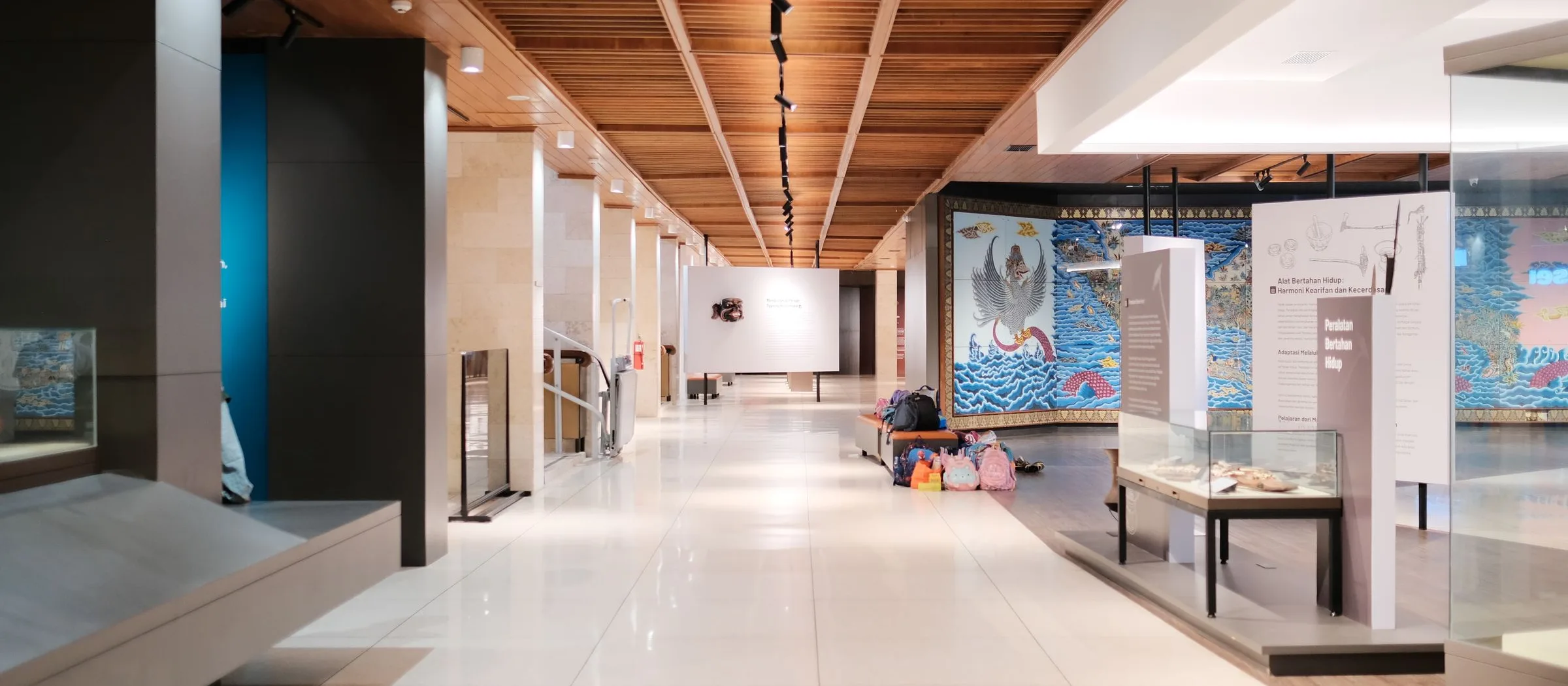
A museum gallery with display cases under even lighting

Culture

Museums, theatres and halls, with close control of the air and quiet services for collections and audiences.

The building services of museums and theatres

Museums, theatres and concert halls ask two things of their building services that few other buildings ask together. A collection must be kept in air whose temperature and humidity hold steady through the day and the year, whether the galleries are full or closed, and an audience must hear the quietest moment on the stage over the plant that cools the hall. Around them the services must protect objects that cannot be replaced, and bring a full house out of a darkened hall safely if a fire breaks out.

We plan the services of a museum or a theatre from the start with its architects, its conservators and its acoustic consultant, since the conditions of the galleries and stores and the noise limit of each hall decide where the plant stands and how the ducts reach the rooms. The stage machinery, the stage lighting and its control are the systems of theatre specialists, and we coordinate ours with theirs. Our designs follow the UAE Fire and Life Safety Code of Practice and the rules of the authorities that approve a public building, with the ASHRAE, EN and IEC standards of each system.

We supply the plant and equipment of each system we build, and our teams install it on site. Before the building opens, the trend logs show every gallery and store holding its conditions, the halls are measured for the noise of the services with the plant running, the sound reinforcement and the hearing loops are set up and tried in every part of the house, and the rooms of the gaseous systems pass their door fan tests; the civil defence then witnesses the fire systems. Under a service contract we maintain the systems we installed. Each of these systems is described under Disciplines.

Air for collections

Wood, paper, textiles and paint swell and shrink as the humidity around them changes, so a collection asks for steady air more than for any one condition. We hold each gallery and store at the temperature and relative humidity its conservators set, day and night and through the seasons, with an air handling unit of its own wherever its conditions differ from its neighbours'. Dedicated outdoor air units first cool and dry the fresh air, the cooling coil of each gallery's unit takes out the moisture that remains, and reheat coils, fed where the plant allows it by heat recovery chillers, bring the air back to its temperature. The supply passes an ePM1 stage of 50 to 80 per cent, more where the air is dusty. Sensors chosen for close control, commonly to within 0.3 K for temperature and 2 per cent relative humidity, report to the building management system, whose trend logs record every point and whose alarms send any drift at once to the engineers on duty.

Quiet services

In a concert hall or a theatre the quietest moment of a performance sets the design of the services. With the acoustic consultant we agree the noise limit of each hall and of the rooms around it, and then treat every path by which the plant could reach them. The plant stands in rooms away from the hall, or on the roof behind acoustic louvres and enclosures, on spring mounts, hangers and inertia bases with flexible connectors, so that its vibration stays out of the structure. Every duct that serves the hall carries attenuators sized for the insertion loss the hall needs, at a pressure drop the fans can take, and ducts and pipes that pass the hall are lagged under a mass-loaded barrier. The air reaches the seats through terminals chosen for their throw and their noise, and no fan coil unit or other unit with a fan of its own stands inside the hall.

Stages and auditoriums

Beside the specialists' stage systems, an auditorium has services of its own. The stage systems take their power from distribution boards of their own, sized with the specialists for their loads, and their cable routes are coordinated with ours. The house lighting takes DALI scenes for the intervals and cleaning, and an interface to the stage lighting control for the performance. We design the coverage of the sound reinforcement across the seats to ANSI/AVIXA A102.01, and give the hall hearing loops to IEC 60118-4, with a field strength of 400 mA/m at the listener. From the stage manager's desk a paging station calls the dressing rooms, the wings and the foyers. Audio travels over the network to AES67, so that the hall's sound is set up afresh for a concert, a play or a conference, and the screens of a conference are sized to ANSI/AVIXA V202.01 for the farthest viewer.

Fire protection

A fire in a museum threatens objects that cannot be replaced, and in a theatre a full house in the dark. The archives and stores whose contents water would harm are protected by gaseous systems to NFPA 2001 or ISO 14520, an inert gas such as IG-541 discharged within 60 to 120 s or a clean agent within 10 s, to a design concentration held for at least 10 minutes. Where an accidental discharge would harm a gallery, its sprinklers are pre-action, or water mist to NFPA 750 serves where little water is wanted. Aspirating detection to EN 54-20 samples the air through small holes where a detector would mar a ceiling. In the auditorium the fire alarm silences the performance's sound and gives the hall to the voice alarm, through equipment to EN 54-16 and loudspeakers to EN 54-24, designed for a speech transmission index of 0.50 or more, measured to IEC 60268-16, as BS 5839-8 and EN 50849 ask, while the house lights come on and the doors on the escape routes unlock.

Lighting and power

Light shows a collection and, over time, harms it, so the lighting of the galleries is set object by object with the curators and the conservators. The galleries take LED spotlights on tracks, each aimed and dimmed for its object, at the colour temperature chosen for the room, and every luminaire is addressable on DALI to IEC 62386, so that each is dimmed and set in scenes from the controls when an exhibition changes. Presence sensors keep the stores dark until someone enters them. When the normal lighting fails, the emergency lighting gives the halls and galleries at least 0.5 lux on the floor, the open area figure of EN 1838, and every escape route at least 1 lux on its centre line, for the one to three hours that EN 1838 and BS 5266-1 set. Standby generators carry the safety services when the supply fails, online double conversion UPS systems keep the security systems and the controls running without a break, and the life safety systems are wired in fire-resistant cable on routes of their own.

Security of collections

A museum's security protects its objects without closing its galleries to the public. We grade the intruder alarms under EN 50131 for the risk of each part, with dual-technology movement detectors, door contacts and glass break detectors of that grade, and send the alarms to the monitoring the client or the authority names. The stores, the conservation studios and the loading bay take access control graded under IEC 60839-11-1, with a PIN or a biometric added where a room needs two factors, and their doors take motorised locks that a handle on the inside always opens. The cameras are placed under EN 62676-4, with 250 pixels per metre at the person wherever a face must be identified, and in Dubai to the requirements SIRA sets for a building of the museum's type. Electronic cabinets release each key to authorised staff and record it, and the security management system shows each alarm with the camera that sees it.

What we hold to in museums and theatres

The collection sets the conditions: the conservators choose the air of each gallery and store, and the services keep it steady whether the doors are open or closed.

The plant stays out of the performance: every path by which its noise or its vibration could reach a hall is treated, from the plant room to the seat.

The protection fits what it protects: gas where water would harm a collection, and pre-action sprinklers or water mist where a gallery could not bear an accidental discharge.

Systems and equipment

Close control

  • Air handling units: one for each gallery or store whose conditions differ, with cooling and reheat coils
  • Dedicated outdoor air units: fresh air cooled and dried before it joins the supply
  • Filters: an ePM1 stage of 50 to 80 per cent on the supply, more where the air is dusty
  • Room sensors: commonly to within 0.3 K for temperature and 2 per cent relative humidity
  • Building management: every point recorded, and any drift sent at once to the engineers on duty

Noise and vibration

  • Attenuators: sized for the insertion loss each hall needs, at a pressure drop the fans can take
  • Duct and pipe lagging: mineral wool under a mass-loaded barrier where they pass the halls
  • Vibration isolation: spring mounts, hangers and inertia bases, with flexible connectors
  • Acoustic louvres and enclosures: around plant on roofs and in yards

Auditorium systems

  • Sound reinforcement: coverage across the seats to ANSI/AVIXA A102.01
  • Hearing loops: to IEC 60118-4, in the halls and at the box office
  • Paging: the stage manager's calls to the dressing rooms, the wings and the foyers
  • House lighting: DALI scenes for the intervals and cleaning, with an interface to the stage lighting control
  • Stage supplies: distribution boards of their own for the specialists' stage systems

Fire and life safety

  • Gaseous systems: inert gases or clean agents for archives and stores, to NFPA 2001 or ISO 14520
  • Pre-action sprinklers and water mist: where an accidental discharge would harm a gallery
  • Aspirating detection: to EN 54-20, sampling the air where a detector would mar a ceiling
  • Voice alarm: a speech transmission index of 0.50 or more in every hall
  • Emergency lighting: to EN 1838, at least 0.5 lux on hall and gallery floors and 1 lux on the centre line of each escape route

Security

  • Intruder alarms: graded under EN 50131 for the risk of each part
  • Access control: the stores, the studios and the loading bay graded under IEC 60839-11-1
  • CCTV: cameras placed under EN 62676-4, in Dubai to the requirements of SIRA
  • Key management: electronic cabinets that release each key to authorised staff and record it