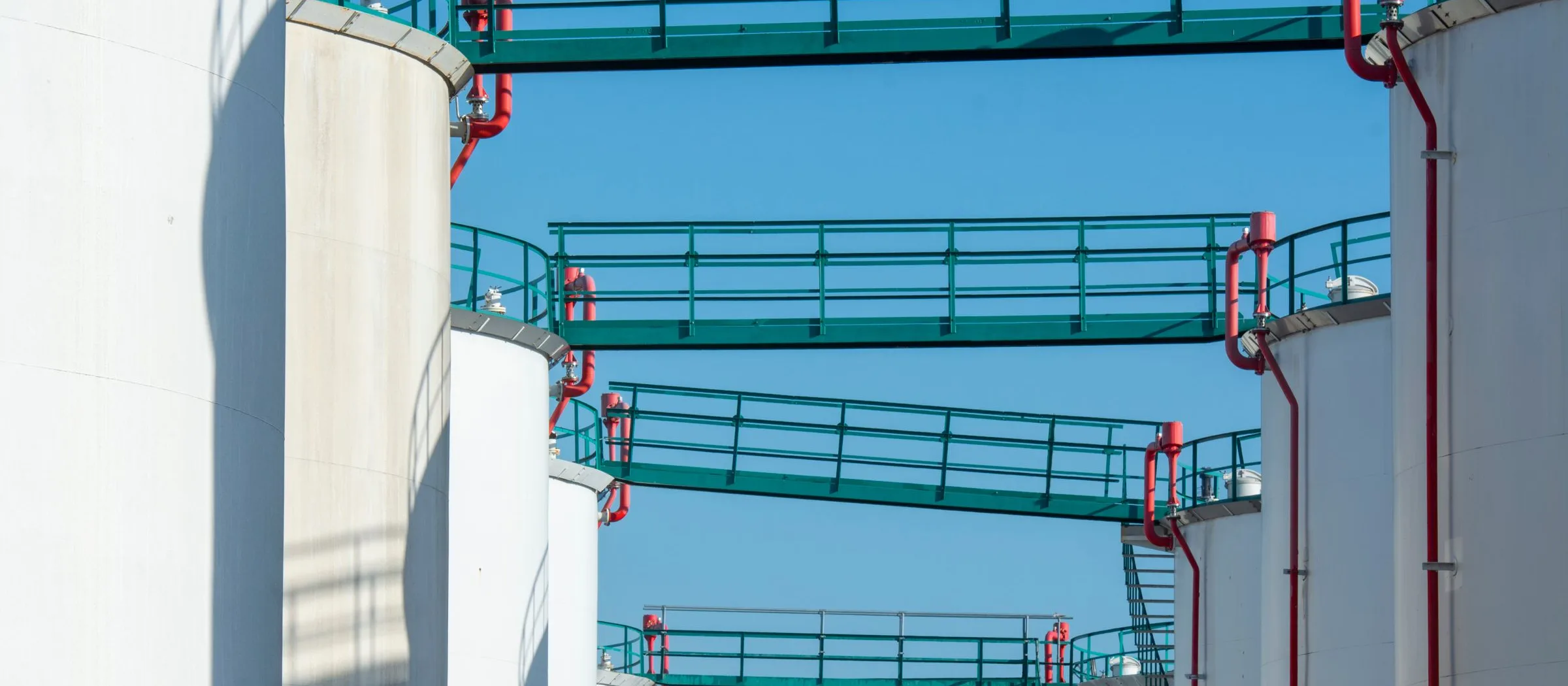
We design, supply, install, test and commission the fuel systems of buildings and plants, and maintain the systems we installed: the bulk storage of diesel above or below ground with its filling points, the transfer pump sets and pipework that bring the fuel to the day tanks of the generators, the tanks of diesel fire pumps and the oil supply of boilers, and the polishing, gauging and leak detection that keep the fuel clean and in its tanks. In a hospital the fuel is what keeps the standby generators running through a long failure of the supply.
The design starts from the engines and burners the fuel serves and from how long they must run without a delivery. We size the bulk store from the generators' consumption at full load, commonly 0.25 to 0.3 L for each kWh they deliver, over the autonomy the hospital or the authority sets: for a hospital at least the 24 hours IEC 60364-7-710 asks of its safety services, or the class of NFPA 110, the hours a system runs at its rated load without refuelling. Diesel is a combustible liquid under NFPA 30, which with NFPA 37 sets how its tanks are built, where they may stand and how much fuel may be kept inside a building and in the room of the engine it serves.
We supply the tanks, pumps, valves, gauges and pipework, and our teams install them on site. Each tank is tested for tightness, the pipework pressure tested, the leak detection and the overfill protection proved, and the transfer system run with the generators on load before handover. Under a service contract we then maintain the systems we installed: the fuel sampled and polished, water drained from the tanks, the pumps and level controls tested, and the leak detection checked.