Skip to the content
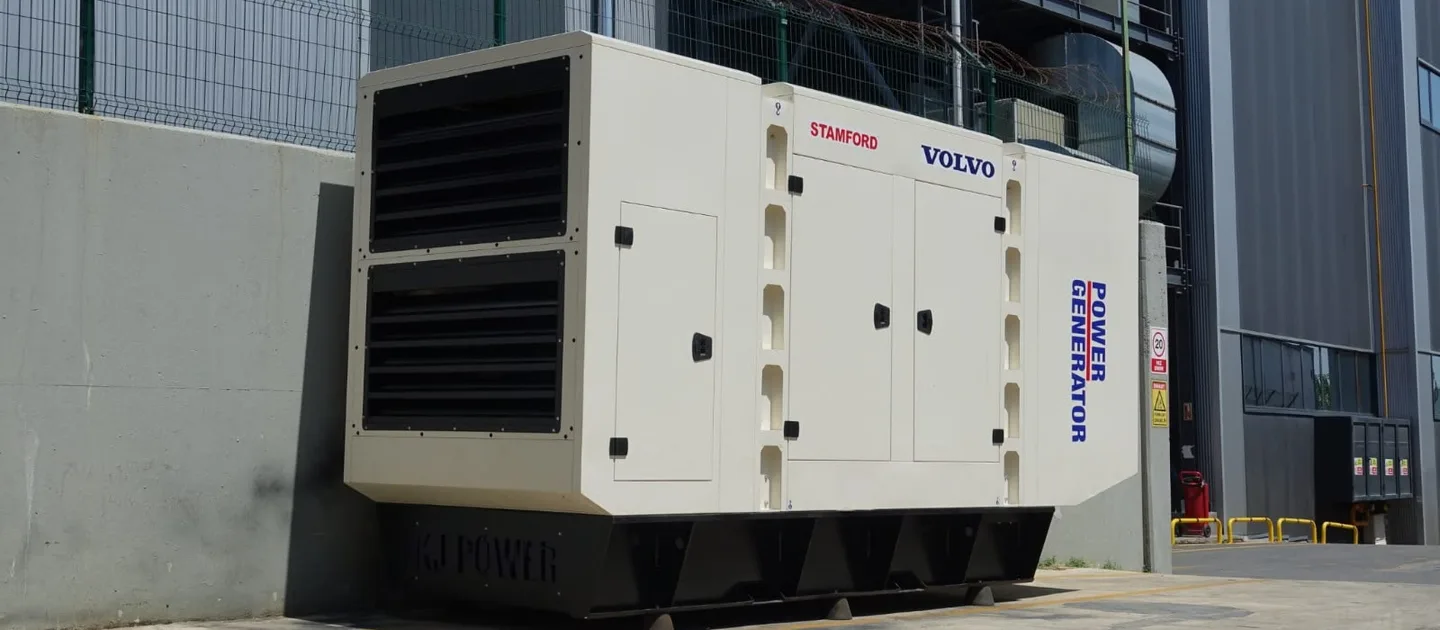
A diesel generator set in its acoustic canopy outside a plant building

Standby and Emergency Power

Generators, UPS systems and transfer switches that keep the essential loads running when the supply fails.

We design, supply, install, test and commission the standby and emergency power systems of buildings, and maintain the systems we installed: diesel generating sets with their synchronising panels, uninterruptible power supplies with their batteries, automatic transfer switches, and the central battery systems of emergency lighting. Together they keep the essential loads of a building running when the utility's supply fails, the life safety systems, the clinical loads of a hospital and the critical loads of a data centre above all.

The design starts from the loads that must be kept and how long each can wait for its supply. Under IEC 60364-7-710 a hospital's safety services return within 15 s and run for at least 24 hours, and the luminaires of its operating tables within 0.5 s for at least 3 hours; under NFPA 99 and NFPA 110 its life safety and critical branches return within 10 s, and the equipment branch after them. We size the generators for the load and for the starting of its largest motors, the UPS for its load and its autonomy, and the fuel for the hours the hospital or the authority sets.

We supply the generating sets, the UPS systems, the transfer switches and the batteries, those of the brands we carry among them, and our teams install, connect and commission them on site. Each generator is run on a load bank at its full rating, each transfer is tested by switching off the mains, and each UPS is discharged through its batteries for its autonomy before handover. Under a service contract we then maintain the systems we installed: generators run and serviced to their manufacturers' schedules, UPS systems and batteries tested, transfer switches operated.

Generators and synchronising

We specify the generating sets to ISO 8528, rated for emergency standby or for prime power as their duty requires and derated for the 50 °C air and the dust of a Gulf site, with the voltage and frequency performance of class G2 or G3 that their loads need. Each set is sized so that starting the largest motors and switching on large blocks of load does not pull its voltage below what the equipment tolerates, and it starts, comes up to speed and takes its load within the time the standard for the building sets.

Where one set is not enough, or a set must stand by for another, the sets run in parallel on a synchronising panel that shares the load between them and sheds the less essential loads when a set stops. We place the sets for their combustion air, their exhaust and their noise, size the day tanks and the bulk fuel store for the autonomy agreed, and report the state of each set to the building management system.

UPS systems and transfer switching

Loads that cannot accept a break take their supply from online double conversion UPS systems, classified VFI under IEC 62040-3, which hold the output voltage and frequency whatever the mains does and change over to their batteries without a break. We design them modular or in parallel, so that the load is carried with one module or unit out of service, with a static bypass and an external manual bypass for servicing without a break, and with batteries, valve-regulated lead-acid or lithium-ion, for an autonomy of commonly 10 to 30 minutes at full load.

The transfer between the mains and the generators is made by automatic transfer switches to IEC 60947-6-1, open transition where a short break is acceptable and closed transition where the return to the mains must not interrupt a hospital's loads a second time and the utility permits it. Rooms of lead-acid batteries are ventilated to IEC 62485-2. In a hospital the safety services, the critical loads and the rest come back in their turn, each on a section of its own.

Systems and equipment

Generating sets

  • Diesel generating sets: emergency standby or prime rated to ISO 8528, in plant rooms or acoustic enclosures
  • Synchronising panels: paralleling, load sharing and load shedding for sets running together
  • Fuel supply: day tanks, transfer pumps and the bulk store for the agreed autonomy
  • Exhaust and cooling: silencers, insulated exhaust pipes and radiators sized for the site's air

Uninterruptible power

  • UPS systems: online double conversion, modular or in parallel, with static and manual bypass
  • Batteries: valve-regulated lead-acid or lithium-ion, in cabinets or ventilated rooms
  • Static transfer switches: for loads with a single supply, fed from two sources
  • Battery monitoring: the voltage, temperature and internal resistance of each block

Transfer and essential distribution

  • Automatic transfer switches: open or closed transition, between the mains and the generators
  • Manual changeover switches: for small loads and for bypassing an automatic switch
  • Essential distribution boards: separate sections for the safety services, the critical loads and the rest
  • Load banks: resistive banks for testing the generators at their full rating

Supplies for life safety and the operating theatre

  • Central battery systems: the supply of the emergency lighting, to EN 50171, for one to three hours
  • Safety power supplies for operating theatres: changeover within 0.5 s for the surgical luminaires
  • Fire pump supplies: a separate and protected supply from the mains and the generators

Standards we work to

  • ISO 8528: reciprocating internal combustion engine driven alternating current generating sets
  • IEC 62040-3: uninterruptible power systems, their performance and test requirements
  • IEC 60947-6-1: transfer switching equipment
  • IEC 60364: low-voltage electrical installations, with part 7-710 for medical locations
  • NFPA 110: emergency and standby power systems
  • HTM 06-01: electrical services supply and distribution
  • EN 50171: central power supply systems
  • IEC 62485-2: safety requirements for secondary batteries and battery installations, stationary batteries