Skip to the content
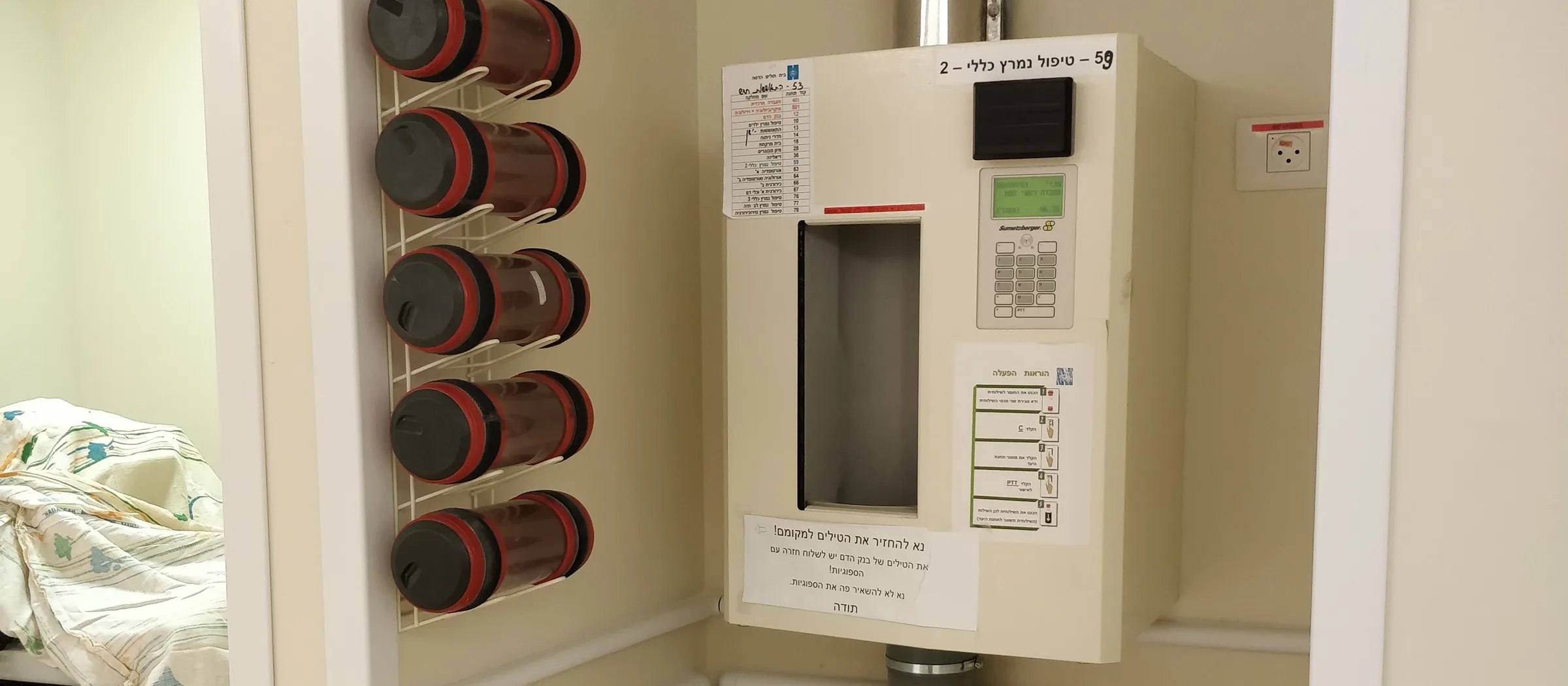
A pneumatic tube station on a hospital ward wall, with carriers in a rack

Pneumatic Tube Systems

Stations, tubes and blowers that carry samples, drugs and blood between a hospital's departments.

We design, supply, install, test and commission the pneumatic tube systems of hospitals, and maintain the systems we installed: the stations of the wards, the emergency department, the intensive care units, the theatres, the laboratory, the pharmacy and the blood bank, the tubes, diverters and blowers between them, and the control system that routes every carrier and tracks it to its destination. The system takes samples to the laboratory and brings drugs and blood back without a porter's journey.

The design starts from the traffic: what each department sends, to whom and how often at the busiest hour, and how fast it must arrive. From it we choose the tube size, divide the system into zones, each with its own blower, place the stations where the staff work, and route the tubes through risers and ceilings with the long bends, diverters and transfer units the carriers need, coordinated with the other services and the fire compartments.

We supply the stations, tubes, diverters, blowers, carriers and controls, and our teams install them on site. Each zone is commissioned station by station and every route is run with test carriers, and the laboratory validates the system with samples before it is taken into use. Under a service contract we then maintain the systems we installed: blowers, diverters and stations serviced, carriers inspected and renewed, and a zone cleaned and disinfected after a spill.

Zones, stations and controls

Hospital systems use tubes of commonly 110 or 160 mm, the smaller for samples and small drugs, the larger for blood bags, drug boxes and bulkier loads, in PVC-U or steel, with long bends so that carriers pass them smoothly at commonly 3 to 8 m/s. Each zone has a blower that drives the carrier by pressure or draws it by suction, and diverters that switch it between lines; transfer units pass carriers from one zone to the next, so that the zones of a large hospital work at the same time as one system.

The control system routes each carrier to the station keyed in, queues the sends of each zone, and tracks every carrier by its tag, so that a sample's journey is recorded from sender to receiver. Sends from the emergency department and the theatres go ahead of the queue, pharmacy stations release controlled drugs only to the staff authorised to open them, and the system reports its faults and its traffic to the hospital's engineers and the building management system.

Samples, pharmacy and hygiene

A blood sample shaken or stopped hard can haemolyse, which raises its potassium and spoils the result. We set the speed of each route, slow the carrier before it arrives and land it in a receiver that catches it softly; in the laboratory, automatic receivers empty the carriers and send them back. With the laboratory we validate the system before use, comparing samples sent by tube with samples carried by hand for haemolysis and the analytes it affects, potassium and lactate dehydrogenase among them, as its accreditation to ISO 15189 expects.

Samples travel in sealed bags inside carriers with leak-proof liners, and the carriers can be cleaned and disinfected. If a sample leaks, the zone is taken out of service until its carrier and tubes are cleaned and disinfected. Where the tubes pass a fire-rated wall or floor they are sealed with collars tested to EN 1366-3 for the wall's rating, and blowers and diverters stand where their noise does not reach the wards.

Systems and equipment

Sending and receiving

  • Ward stations: on every ward, with a display and a rack of carriers
  • Laboratory receivers: landing carriers softly and emptying them automatically
  • Pharmacy stations: secure, opened only by authorised staff
  • Emergency and blood bank stations: sending ahead of the queue for urgent samples and blood

Transport network

  • Tubes: 110 or 160 mm, in PVC-U or steel, with long bends
  • Diverters: switching carriers between lines
  • Transfer units: passing carriers between zones
  • Blowers: one for each zone, driving carriers by pressure or suction

Samples and loads

  • Sample carriers: leak-proof liners and inserts that hold the sample tubes still
  • Large carriers: for blood bags and drug boxes in 160 mm systems
  • Carrier tags: identifying each carrier so that the system can track it

Routing and safety

  • Control system: queueing, priorities and the record of every send
  • Remote monitoring: faults and traffic reported to the hospital's engineers
  • Fire alarm interface: carriers held and zones stopped as the fire strategy sets
  • Fire collars: sealing the tubes where they pass fire-rated walls and floors

Standards we work to

  • HTM 2009: pneumatic air tube transport systems
  • FGI Guidelines: the design and construction of hospitals
  • ISO 15189: medical laboratories, requirements for quality and competence
  • EN 1366-3: fire resistance tests for service installations, penetration seals
  • The local authority codes of the UAE, the UAE Fire and Life Safety Code of Practice among them